
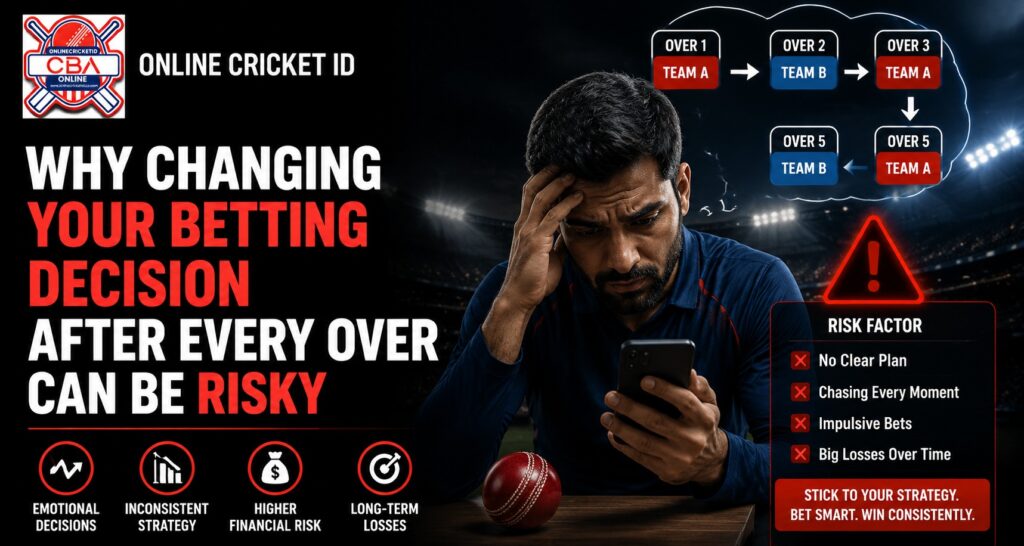
Cricket matches change quickly, especially in shorter formats where every over can influence momentum and team strategies. However, constantly changing decisions after every small event can lead to confusion and poor planning. Online Cricket ID users should understand why emotional reactions to every over may affect decision-making and why a structured approach is important when following cricket markets.
A single over can change the match situation, but it does not always define the final outcome. Understanding the bigger picture helps users analyse performances, conditions, and match trends more effectively.
Why Cricket Decisions Change So Quickly
Modern cricket provides continuous updates through live scores, player statistics, and match analysis. Every over can bring:
- A wicket
- A boundary sequence
- A bowling change
- A partnership shift
- A change in required run rate
These moments naturally influence how fans view the match. However, reacting to every over without considering the complete situation can lead to inconsistent decisions.
The Risk of Making Emotional Decisions
One of the biggest challenges in live cricket analysis is managing emotions. A sudden wicket or a few expensive deliveries can create a strong reaction.
Common emotional responses include:
- Changing decisions without proper analysis
- Ignoring previous match information
- Following short-term excitement
- Overreacting to temporary situations
Users accessing platforms through Online Cricket ID Login should focus on understanding match developments rather than making frequent changes based only on emotions.
Why Every Over Does Not Tell the Full Story
An over is only one part of a cricket match. A team may have a poor over and still recover through:
- Strong batting partnerships
- Effective bowling spells
- Better field placements
- Changing pitch conditions
For example, losing a wicket in one over does not always mean a batting team has lost control. Similarly, a good over by a bowler does not guarantee continued dominance.
Looking at the complete match situation provides a clearer perspective.
The Importance of Having a Clear Plan
A structured approach Helps users avoid unnecessary changes during live matches. Before making any decision, it is useful to consider multiple factors.
Important areas include:
- Current score situation
- Remaining overs
- Player form
- Pitch conditions
- Team strategy
- Previous performance trends
A clear plan allows users to respond logically instead of reacting to every individual event.
Common Mistakes When Changing Decisions Frequently
Constantly changing opinions after every over can create several problems.
Some common mistakes include:
Ignoring Long-Term Match Trends
A single over may not represent the overall direction of a match. Looking at broader trends provides better understanding.
Following Short-Term Momentum Only
Momentum can shift quickly in cricket. A temporary advantage does not always continue.
Making Decisions Without Updated Information
Match situations depend on many factors, not only the latest score update.
Losing Consistency
Frequent changes can make it difficult to evaluate what worked and what did not.
How Live Cricket Analysis Should Be Approached
A balanced analysis considers both current events and future possibilities.
Useful questions include:
- Is the pitch helping batters or bowlers?
- Which players are still available?
- How much pressure is on each team?
- Are current conditions likely to continue?
This approach helps create a more complete understanding of match situations.
Technology and Real-Time Cricket Information
Digital platforms have made cricket information available instantly. Users can access live scores, statistics, and match updates within seconds.
Through features connected with an Online Cricket Betting ID, users can follow match developments and review important information before forming opinions.
However, faster information does not always mean better decisions. The quality of analysis depends on how information is interpreted.
Building Better Cricket Decision Habits
Developing disciplined habits can improve the way users follow cricket markets and match situations.
Helpful practices include:
- Reviewing the full match context
- Avoiding decisions based only on emotions
- Tracking player performance
- Understanding different match phases
- Learning from previous decisions
These habits encourage a more organised approach to cricket analysis.
Understanding Cricket Platforms and Decision-Making
A reliable digital experience depends on users having access to clear information and understanding how cricket situations develop. Whether someone is exploring a Cricket Online ID or comparing features offered by a Best Online Cricket Betting ID Provider, knowledge and responsible decision-making remain important.
The ability to analyse match situations calmly helps users understand cricket beyond individual overs and short-term changes.
Conclusion
Changing decisions after every over can create confusion because cricket matches are influenced by many factors beyond one short period of play. A single wicket, boundary, or bowling spell may change momentum, but it does not always determine the final result.
By focusing on complete match analysis, maintaining a clear plan, and avoiding emotional reactions, users can develop a better understanding of cricket situations and decision-making.
FAQs
Why is changing decisions after every over risky?
Changing decisions after every over can lead to emotional reactions and may ignore the bigger match situation.
Does one over decide a cricket match?
No. Cricket matches involve many phases, and one over usually represents only a small part of the game.
What factors should be considered during live cricket analysis?
Factors include score, wickets, player form, pitch conditions, remaining overs, and team strategy.
How can users avoid emotional cricket decisions?
Users can avoid emotional decisions by following a structured approach and focusing on long-term match trends.
Why is match context important?
Match context helps explain whether a short-term event is part of a larger trend or only a temporary change.
What makes cricket analysis more effective?
Consistent research, understanding match conditions, and reviewing multiple factors can improve cricket analysis.