
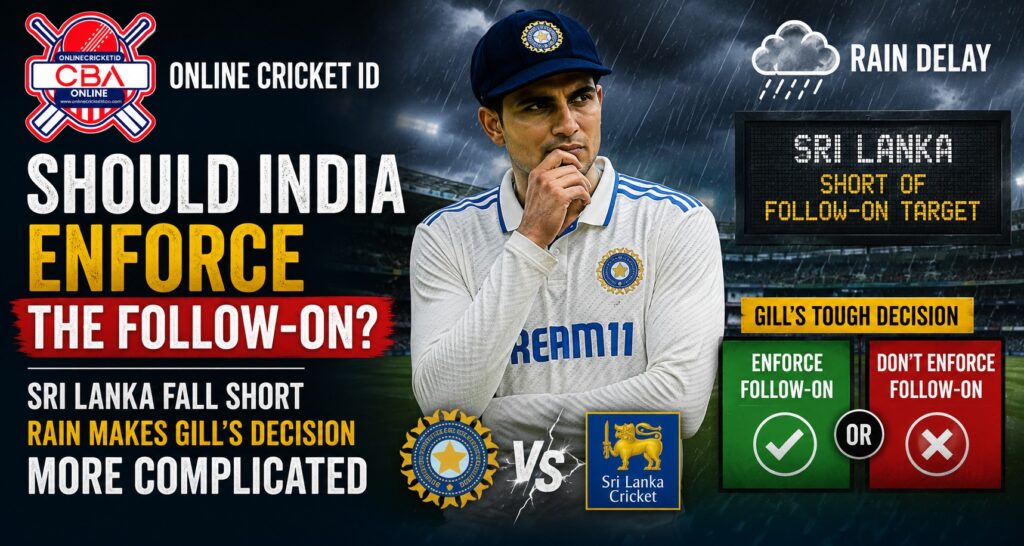
Test cricket is often decided by small tactical choices, and one of the biggest decisions facing a captain is whether to enforce the follow-on. As fans analyse match situations through platforms like Online Cricket ID, Shubman Gill’s possible decision against Sri Lanka has become a major talking point. If Sri Lanka fall short of the required first-innings target, India will need to balance attacking intent with the impact of weather interruptions.
The follow-on rule gives India an opportunity to keep Sri Lanka under pressure, but rain has made the situation more complicated. With limited playing time available, Gill must consider every factor before making the final call.
Understanding the Follow-On Situation
A follow-on is enforced when the team batting second scores significantly fewer runs than the team batting first. In a five-day Test match, the leading team can ask the opposition to bat again immediately if the required run difference is achieved.
For India, the decision depends on:
- Sri Lanka’s final first-innings score.
- Remaining match time.
- Weather conditions.
- Bowler workload.
- Pitch behaviour.
A large lead gives India control, but the follow-on decision requires careful planning.
Why Rain Changes Gill’s Strategy
Rain interruptions can completely change Test match tactics. A team that has dominated for several sessions may suddenly face pressure because fewer overs remain.
If rain continues affecting play, India may prefer immediate pressure instead of waiting for another batting innings.
Important factors include:
- Fewer overs available to take 20 wickets.
- Increased importance of quick breakthroughs.
- Less time to build a bigger target.
- Greater value of keeping Sri Lanka under pressure.
However, forcing the follow-on also carries risks.
Advantages of Enforcing the Follow-On
If Sri Lanka fall short, India could immediately send them back to bat. This approach provides several benefits.
More Time to Take Wickets
The biggest advantage is saving time. Instead of batting again, India can use those sessions to attack Sri Lanka’s batting lineup.
Maintaining Psychological Pressure
A team forced to bat again after a poor first innings often faces additional mental pressure.
India can continue attacking with:
- Fresh field placements.
- Aggressive bowling changes.
- Close catching positions.
Taking Advantage of Current Conditions
If the pitch is offering movement or uneven bounce, continuing with the ball may be the smarter choice.
Risks of Enforcing the Follow-On
Although the follow-on looks attractive, captains must also consider possible disadvantages.
Bowler Fatigue
India’s bowlers may already have spent a long time on the field. Asking them to immediately bowl again can reduce effectiveness.
Fast bowlers especially require recovery after demanding spells.
Batting Conditions May Improve
If the pitch becomes easier for batting, Sri Lanka could recover and create pressure on India.
Opposition Confidence
A strong second innings from Sri Lanka could change the momentum of the match and put India under unexpected pressure.
How Shubman Gill Could Approach the Decision
Gill’s captaincy will be tested because there is no automatic answer. The correct choice depends on the match situation at that moment.
Possible approaches include:
Enforce the Follow-On
This option may suit India if:
- Sri Lanka are significantly behind.
- Weather has reduced available overs.
- Bowlers are ready.
- The pitch still supports the attack.
Bat Again
India may choose another innings if:
- Bowlers need rest.
- The lead is not large enough.
- More runs can create a safer advantage.
- Time is not a major concern.
Importance of India’s Bowling Combination
India’s bowling attack will influence Gill’s decision. A strong bowling unit increases confidence in enforcing the follow-on, while tired players may encourage a more cautious approach.
The captain must evaluate:
- Fitness of fast bowlers.
- Effectiveness of spinners.
- Pitch assistance.
- Sri Lanka’s batting confidence.
A balanced decision could be the difference between a comfortable win and a difficult finish.
Rain and Test Match Strategy
Weather is one of the biggest unpredictable factors in Test cricket. Rain does not only reduce overs; it changes how teams calculate risk.
With possible interruptions, teams often prefer:
- Aggressive declarations.
- Faster scoring.
- Immediate wicket-taking opportunities.
Fans following match updates through services related to Online Cricket ID Login often discuss these tactical situations because captaincy decisions can completely change the direction of a Test match.
The Bigger Picture for India
India’s goal is not just gaining a first-innings advantage but converting that position into victory. Gill must consider the complete match scenario rather than focusing only on the follow-on opportunity.
A successful Test captain needs to balance:
- Attack and defence.
- Player workload.
- Time management.
- Match conditions.
Following Cricket Strategy and Match Developments
Modern cricket audiences closely follow tactical decisions, player performances, and match analysis. Discussions around Cricket Online ID and match-related platforms often focus on understanding these important moments.
While tools and platforms can Help fans follow games, the real outcome depends on performances, conditions, and decisions made on the field.
Final Thoughts
If Sri Lanka fall short of the follow-on target, Shubman Gill will face one of the most important decisions of the match. Rain has added another layer of complexity, making time management just as important as bowling strength.
Enforcing the follow-on could give India the advantage of immediate pressure, but captaincy requires considering player fitness, pitch conditions, and weather forecasts.
For cricket followers exploring information around the Best Online Cricket Betting ID Provider or match discussions, the key lesson remains the same: Test cricket is often decided by strategy as much as skill.
FAQs
What is the follow-on rule in Test cricket?
The follow-on allows the leading team to ask the opposition to bat again immediately if they fall behind by the required number of runs.
Why is rain important in a follow-on decision?
Rain reduces playing time, making quick wickets and aggressive decisions more valuable.
Should India always enforce the follow-on if Sri Lanka fall short?
Not necessarily. The decision depends on bowlers’ fitness, pitch conditions, and remaining match time.
What is the main advantage of enforcing the follow-on?
It gives the leading team more time to take wickets and maintain pressure on the opposition.
Can enforcing the follow-on create problems?
Yes. Tired bowlers or improved batting conditions can allow the opposition to recover.